Frequently Asked Questions
This information should help put your mind to rest about the biggest fears of new dancers.
Still have questions? Reach out to us directly and we’ll be happy to help you!
-
Learning to dance well depends just as much on intelligent, well-paced instruction as a student’s capability. Your instructor is responsible for making sure that the speed of the class allows for you to enjoy the class, socialize with others, and also physically master the movements. If you can walk, you can dance. Two left feet and all. In addition, the class is repeated until you have full confidence in the material.
-
New dancers often worry that everyone will be looking at them, evaluating their every move. The truth is that other students in the class are completely focused on what they are doing and don’t have enough attention to give to anything else. No one will laugh at you-they probably won’t even notice what you are doing at all. Add to that our commitment to keeping our environment friendly and welcoming. We simply do not allow an environment that is not open and friendly to all students of any level.
-
Every sport or activity requires certain tools in order to perform it. One of the tools for dancing is dance shoes. They have a special sole that allows one to dance better, and they don’t scuff or mar the floor like “street shoes”. In your first class session you may dance in socks. Your instructor will give you all the information you need to purchase dance shoes. It’s best to wait until you have come to the first class before purchasing dance shoes. Click here to learn more.
-
One ballroom dance and one Latin dance are the focus for each 4 week series class. We currently rotate between Waltz and Jive, and Tango and Cha Cha.
-
You do not need a partner to take any of ADC’s ballroom dance classes. We do rotate in class frequently, which enhances not only the social aspect of the class, but it also has been shown to increase the dance skills of the students.
-
Having good timing and musical skills are sometimes born, but most often learned. The Intro to Ballroom class begins by teaching these basic music skills: finding the beat, counting, and how to put those things to the movement of the body. Don’t worry if you have “no rhythm”, we teach that too!
-
Yes! We strongly encourage that all students new to our studio (regardless of prior dance experience) start in the Intro to Ballroom Series. We encourage you to think of Intro to Ballroom as an introduction to our studio, to the routines that we base all the higher level class material on, and to the technique and methods of our mentors, which should still be helpful to you even if you've danced before. Intro to Ballroom teaches two dances per month (waltz and swing, or foxtrot and cha cha) and serves as a great equalizer, because people who are more advanced only take this series until they have the routines memorized and can dance them by themselves and to music, while newer dancers stay in the class for as long as it takes for them to complete these class goals in front of an instructor. People have completed Intro to Ballroom in as little as 2 months or as long as a year and a half. We regularly have advanced dancers and even professional ballet dancers who have taken this class, some of whom now actually teach for the studio! All of them were happy with the class content and continued on in the program we offer. The reason we start everyone in Intro to Ballroom is so that everyone who emerges from the course can count music, find a downbeat, understand alignments, know enough basic partnering concepts and skills, as well as knowing the choreography, so that when they test out into level 1, we have no need to review or discuss those elements and we can add more dances and advanced choreography straightaway. This prevents our intermediate class from becoming diluted with people joining at any time and essentially slowing the progress of the higher level classes down.
-
The teachers here at Areté Dance Center can keep you improving and advancing from a beginning ballroom dancer all the way through advanced with the variety of ballroom dance classes and workshops we offer continually throughout the year. Learn more about our ballroom dance classes here.
What to Expect During Your First Dance Lesson or Group Class
-
Please arrive 10 minutes early for your first lesson or group class. This will give you time to get settled in and complete your intake paperwork. We highly recommend you download the Glofox app (this link for Apple or this link for Android) in advance to save time on the day of your first lesson so you can get started dancing sooner!
-
Our studio is located at 979 Fremont Avenue, Los Altos, CA 94024. There is plenty of free public parking available behind the studio. During normal operation, please enter via the front door on Fremont Avenue to meet your private lesson instructor or to be checked in for your group class.
-
Please come dressed in comfortable clothing you feel good moving in. Athletic wear such as yoga pants or track pants are fine. You can also come in “dressy casual” slacks, dress skirts, or ballroom dance clothes. We do have a “no jeans” in the ballroom policy.
-
Please bring socks to change into for your first lesson on our indoor floor. No street shoes are allowed on the indoor dance floor. For outdoor lessons, please just wear your regular street sneakers.
Click here for more information on how to know when you're ready for ballroom shoes, what to purchase, and where to go (locally) to get fitted and purchase your new shoes!
-
Ballroom dance has two main components. Your individual skills and your partnering skills. It is imperative that you learn to move your own body before attaching yourself to a partner.
Come willing to learn beginner dance steps, basic dance technique, fundamentals of music, dance etiquette, and how to look and feel good on the dance floor.
No partner needed. In private lessons, your instructor will act as your partner. In group classes, we do our best to ensure even numbers of group class participants so that you will get paired up and meet new people.
Eat a snack or meal beforehand. Dancing is a mental and physical activity. You will need some energy to participate at your best.
-
Just yourself and a willingness to learn. Truly anyone can be taught to dance if you have patience with yourself and try to not judge yourself or your progress too critically.
-
We accept cash, checks, and credit cards. For credit cards, you can either pay online or bring your card with you to the studio for your instructor to run. Cash and check payments can be made at the time of your lesson.
-
At the end of your first lesson, you'll be able to purchase a lesson package if you want to continue. We'd then set up your appointments. Lesson packages are offered at a discount over single private lessons on the premise that your lessons will be taken on a once-weekly (or more) standing appointment basis for the same day and time each week.
-
Directions from San Jose:
Take 280 north to the Foothill Expressway/Grant Road exit. Merge onto Foothill Expressway going north. Continue on Foothill Expressway 1.5 miles. Take the Loyola Corners exit for Fremont Ave. Turn left onto Fremont Ave. off of the exit. Continue on Fremont through 1 stop light. We are on your right after Cafe Vitale, etc.
Directions from the Peninsula:
Take 280 south to the Magdalena exit. Make a left on Magdalena and a right on Foothill Expressway. Take the Loyola Corners exit for Fremont Ave. Turn left after exiting and go over the small bridge. Turn left at the light (Fremont Ave.). We are on your right.
Directions from Highway 85:
From Highway 85 either north or south exit Fremont Ave. headed west. Go approximately 1.5 miles on Fremont Ave. until it curves around to the right. Continue on Fremont Ave. after the curve. We will be on your right after A Street.
How to Pick a Ballroom Dance Shoe
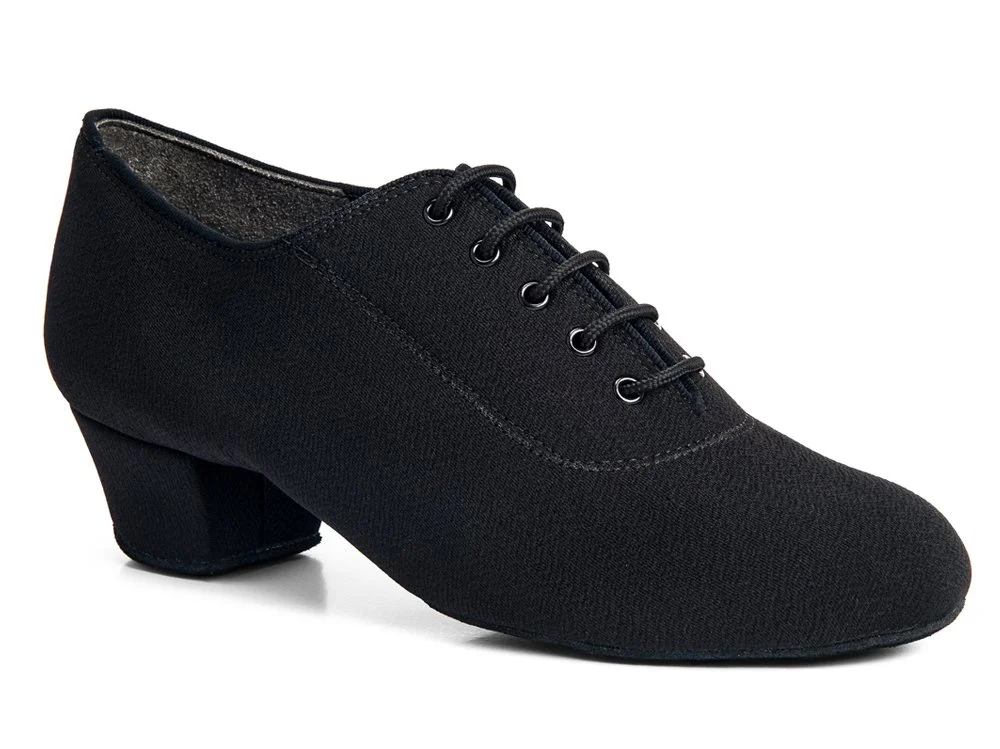
Ballroom and Latin dance shoes are form fitting and should not be worn loose. Overtime, certain types of dance shoes can stretch and relax a little with wear. When trying on a pair of shoes, look for a size that wraps around the foot like a snug glove. There should not be space between your foot and the shoe at the heel or toes, otherwise the foot will slide and wobble. The heel should fill the back of the shoe and your toes should reach the tip of the shoe, but the toes do not bend to make the foot fit. Think of your dance shoe as a second layer of skin that envelopes and protects the foot while offering support and stretch. Compared to street shoes, dance shoes are soft and will stretch, making the fit feel tighter while accommodating the shape of your foot. A poor fitting shoe will feel roomy and loose, or if they are too tight, will bite the back of the heel or wrinkle and squeeze the toes.
-
As soon as you know you’re going to continue dance as an ongoing pursuit. If dancing is an interest to you, purchasing a shoe will prepare you for success.
-
No, this can be dangerous to your knees. It also dirties and scratches the floor. We recommend using socks until you’ve decided to commit to dancing.
-
Ideally, your number one priority is to find a quality shoe that is comfortable and fits correctly. Purchase a shoe that fits that priority but is still in your budget. Ballroom dance shoes range in quality. More advanced dancers should invest in a really well made shoe as it is the most used piece of equipment a dancer utilizes.
-
To start you only need one good pair of practice shoes, which can be used for all types of ballroom dance. Over time you can purchase more specialized shoes for your dancing needs.
-
Suede is the standard material for the bottom of the shoes in ballroom dancing. It offers the best traction and slide for your shoe. It allows for safe, lateral turning actions and the ability to feel the floor while dancing.
-
Going to a dance store in person allows you to inspect different shoes and helps you find a pair that is comfortable and fits correctly. It is HIGHLY encouraged that your first pair be fit by a professional. We recommend the Ballroom Connection in Sunnyvale, CA.
-
Ballroom and Latin dance shoes are able to be customized to a dancer's needs. Please let your local store know if you need a wide size.
-
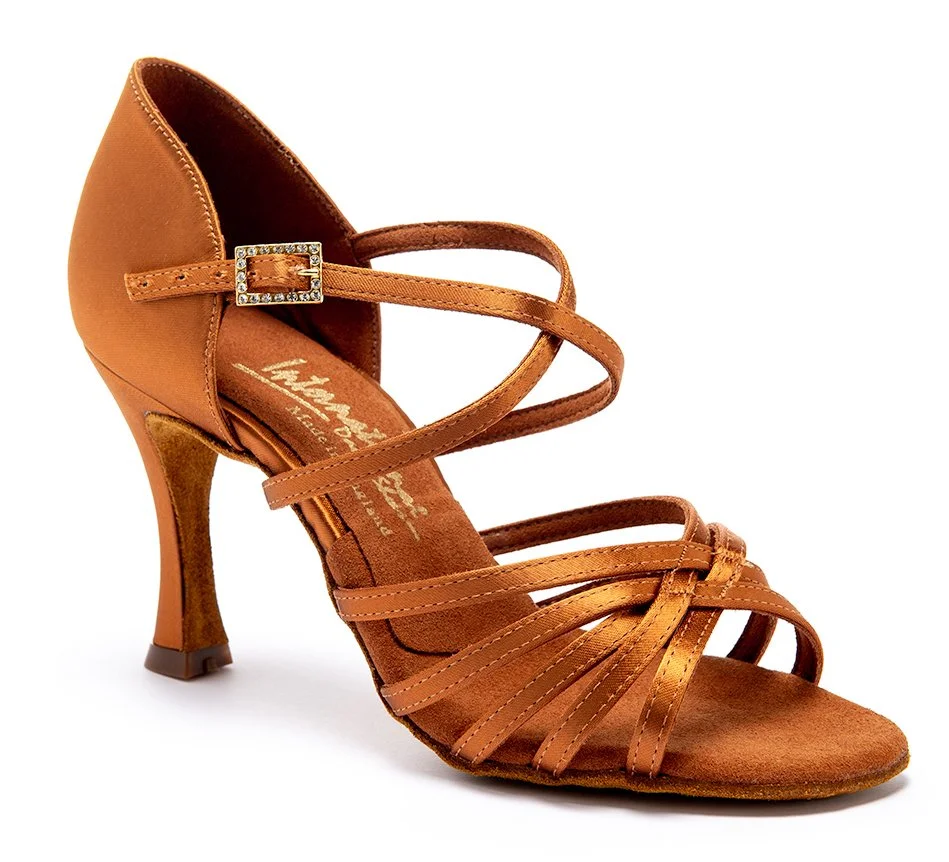
Beginners should pick on a shorter heel. A dancer will grow into a taller heel as they improve.
-
Wearing your dance shoes outside of the ballroom will damage the suede sole; therefore, wear your street shoes to class and bring your dance shoes to change in the studio. Most dancers use a shoe bag, which are often included with your shoe purchase. We highly recommend buying a shoe brush as well and brushing after use to keep the nape fresh and prevent wear, thus extending the life of the shoe.
-
Practice shoes are practical and comfortable. They are the ideal choice for beginning dancers. They are versatile, good for practicing both Ballroom and Latin.
-
Latin shoes have a taller heel to dance on the ball of the foot and can be open toed, so generally they are worn with shorter skirts/dresses. Ballroom shoes have a shorter heel and closed toe, better for swinging the foot.